


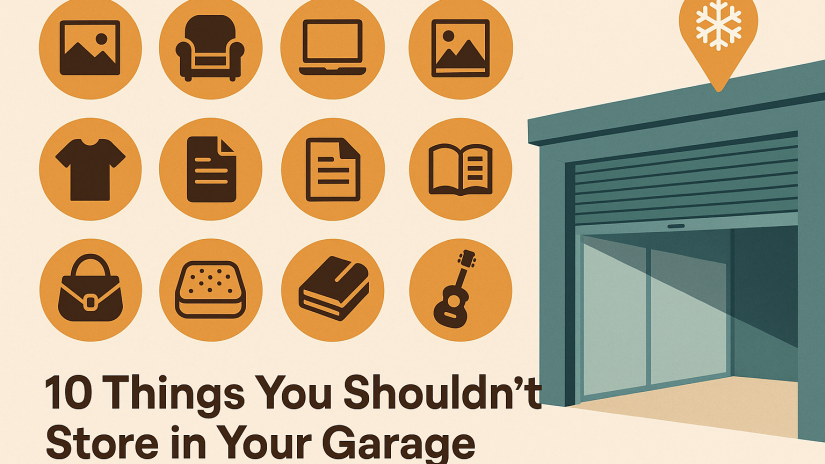


10 Things You Should Never Store in Your Garage | Protect Your Valuables with Climate-Controlled Storage
Here’s a list of things you should never store in your Garage:
One of the easiest ways to get rid of stuff in your home is to simply move everything to your garage. But this is also one of the difficult places to store items because of the tight conditions found in garages. Extreme heat, extreme cold, high humidity, dust, and unwanted critters all contribute to an environment that accelerates the aging process of nearly every item that enters your garage.
Moreover, if you store an item in your garage and don’t retrieve it until you want it again, it could already be damaged – either cracked, mildewed, stained, or completely unusable.
Below are ten common items that you would typically find in a garage along with their experiences within the garage and where each should really be kept:
1. Photos/Photo Albums
It’s nearly impossible for photographs to remain intact in a garage. Photographs become brittle and curled up from the heat; moistened and stuck together from the humidity; and fade quickly. Don’t allow your memories to suffer – keep them in your home or a climate-controlled storage facility.
2. Wood & Furniture
Wood expands and contracts with temperature swings, so when it gets warm the wood tends to expand and when it is cool it shrinks down. When this happens enough times, it is more likely the furniture will experience cracks, peeling, loose joints, and extreme warping. Wood furniture is particularly subjected to these types of damages.
3. Electronic Devices
Hot/humid environments severely limit the operation of computers, televisions, video game systems, speakers, printers and other electronic devices. The garage can cause rust on the interior electronic components of electronic equipment very quickly. For optimal performance, electronic devices require a climate-controlled environment.
4. Clothing/Bedsheets/Linens/Fabrics
Garages collect moisture along with pests and soft goods absorb both. Garages can grow mildew and serve as nesting grounds for insects/rodents on clothing, bedding and linens.
5. Important Documents/Papers
Birth certificates, financial records, tax returns — all of your documents made of paper will absorb moisture instantly. After one month in a garage, your garage will have ruined irreplaceable documents.
6. Artwork
Painting, photos in frames, frame, canvas prints and all forms of artwork will experience cracks, warping, fading, and mold growth due to fluctuations in humidity levels. Artists and collectors of art should never store art in a garage.
7. Leather Goods
Leather goods will dehydrate in heat, crack in cold temperatures and absorb moisture from humid air. Leather goods, including jackets, couches, purses, boots and other types of leather goods can quickly deteriorate in a garage.
8. Mattress
A mattress absorbs moisture like a sponge. Within a short time in a garage a mattress will develop mildew, odor, and pest issues. Making restoration of such a damaged mattress is impossible.
9. Books
Books will expand, warp, develop mold, and decay at a rate much quicker than nearly any household item. Storage boxes of books placed in a garage are normally destroyed after the first seasonal change.
10. Music Equipment/Gear
Garages will warp guitars, crack violins, loosen drumheads and rust brass instruments. Musicians would be well advised to utilize climate-controlled storage spaces to store their music equipment/gear.
What Can Be Stored Safely in Your Garage
As mentioned above, there are few household items that can withstand the environmental conditions of a garage. Examples of some of the household items that are built to endure extreme environmental conditions and therefore are safe to store in your garage include:
- Tools
- Gardening and lawn equipment
- Bicycles
- Plastic storage containers
- Athletic equipment
Storage Facilities Offer a Solution for Homeowners
Storage units offer home owners an opportunity to free up additional space in their home by utilizing the facility to store their belongings. Self-storage facilities save homeowners money and time by eliminating the costs of replacing lost or damaged items, minimizing the risks of damaging their own property, and maintaining the organization of their home. Garages were intended to hold vehicles and tools – not treasure.
Reserve your unit today!
To be rest assured that your valuables continue to be useful for years to come, remove those important things from your garage’s floor and store them in a storage unit facility designed to preserve them. Climate-controlled storage preserves your valuables, limits the potential damage to your items, and allows you to retain ownership of such treasures.


