


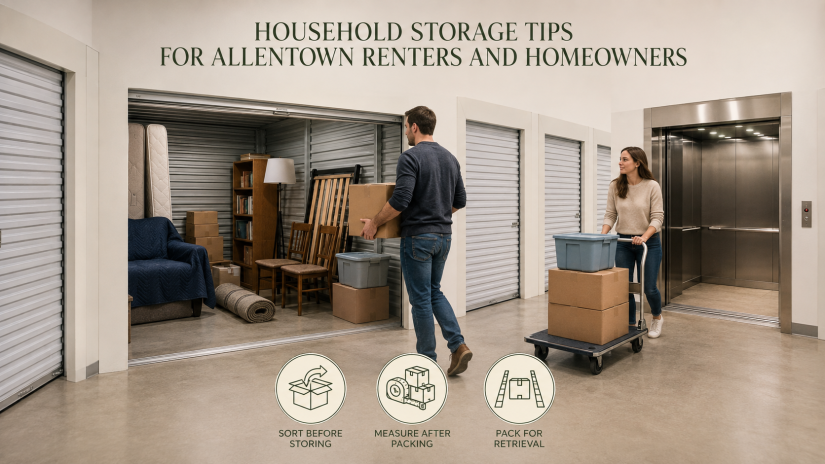


Household Storage Tips for Allentown Renters and Homeowners
Homes don’t usually run out of space all at once. It happens one box at a time.
The spare room becomes a place for old furniture. Seasonal decorations take over the basement. A move leaves unopened boxes in every corner, and eventually the dining table is holding things that have nowhere else to go.
Household storage services can give those belongings a separate place without forcing you to make every decision in one weekend. StorHouse Self Storage – Lehigh Street at 1449 Lehigh Street offers climate-controlled units, interior access, elevator access, ADA accessibility, 24-hour cameras, and on-site management.
The useful part isn’t simply getting things out of the house. It’s storing them in a way that doesn’t create another mess somewhere else.
Decide What Problem the Unit Needs to Solve
A storage unit works better when it has a clear purpose.
You may need space during a move, renovation, family change, or long trip. You may be combining two households or clearing a room for a home office. Some people just want the garage to hold a car again.
Write down what needs to go into storage and why. That list will help you choose a unit and decide what should stay at home.
StorHouse’s Residential and Household Storage page covers common uses for extra household space.
Avoid filling the unit with items you already plan to discard. Sell, donate, recycle, or dispose of those before move-in. Otherwise, you’ll pay to move them twice.
Renters Should Plan Around the Next Move
Apartment storage problems tend to involve closets, furniture, and lease dates.
A unit may help when moving into a smaller apartment, living with roommates, or waiting for a new lease to begin. It can also hold furniture that won’t fit now but may work in the next place.
Measure the furniture before renting. A sofa that barely fit through the current apartment hallway may be just as awkward at the storage facility.
Keep documents, medication, work clothes, chargers, and daily household supplies with you. If there’s a gap between apartments, pack one group of essentials that never goes into the unit.
Label boxes by room and contents. “Kitchen, baking dishes” is useful. “Apartment” tells you almost nothing when every box came from the same place.
Homeowners Can Use Storage Without Moving
You don’t need to be changing addresses to need household storage.
A renovation may require furniture to leave several rooms. A growing family may need the spare room back. Seasonal equipment can fill a garage long before anyone realizes there’s no room to walk.
Storage gives you time to reorganize without getting rid of belongings you still use. It can also help during a home sale by removing extra furniture, packed boxes, and large collections from the main living areas.
Keep the unit connected to a real plan. If the goal is to clear the garage, decide what will return after the project and what should remain stored. Set a review date for boxes that don’t have an obvious future.
The unit should make the house easier to use, not become a permanent hiding place for unfinished decisions.
Consider Climate Control for Sensitive Belongings
Allentown goes through warm, humid weather and cold winters. Some household belongings react to those changes more than others.
StorHouse Self Storage – Lehigh Street offers Climate-Controlled Units that provide a more consistent indoor environment. Customers may want to compare this option for wooden furniture, electronics, photographs, artwork, paper files, leather, and upholstered items.
Climate control doesn’t fix moisture that was already packed inside a box. Clean and dry everything before move-in. Give rugs, furniture, clothing, and recently washed items enough time to dry completely.
Use breathable furniture covers instead of sealing wood or fabric tightly in plastic. Pack photographs and paper in sturdy containers, and keep them away from anything that could leak.
Tell the Allentown team what you plan to store. They can explain the unit options currently available, but the final choice should match the material and storage timeline.
Choose the Unit After You Pack
Estimating from unpacked rooms usually leads to bad math.
Count boxes after they’re filled. Measure bed frames, sofas, tables, shelving, appliances, and anything else that may be difficult to move. Include room for an aisle if you expect to retrieve belongings before move-out.
The StorHouse Storage Unit Size Guide can help you estimate a starting point. Availability changes, so confirm the actual unit with the facility before scheduling movers.
Allentown’s interior and elevator access also need to be part of the plan. Ask about the route from the unloading area to the available unit. Check whether large pieces will fit through entrances, hallway turns, elevator doors, and the unit opening.
Bring moving equipment that fits the job. A hand truck, furniture dolly, straps, and enough help can prevent a long move from becoming a painful one.
Pack for Retrieval, Not Just Move-In
The box you need first will somehow end up behind the heaviest furniture. It’s basically a law of storage.
Put belongings you may need near the entrance. Seasonal clothing, paperwork, tools, and holiday decorations should remain reachable if they’ll come out before everything else.
Place heavier boxes at the bottom and keep labels facing the aisle. Avoid tall stacks built from weak or damaged cardboard. Don’t use upholstered furniture as shelving.
Number the boxes and keep a simple inventory on your phone. Add a short description of what’s inside and where the box sits in the unit. Take photos once loading is finished.
If several family members share the space, organize belongings by person or room. One person’s boxes shouldn’t block everyone else’s things.
Review the Unit From Time to Time
Household storage changes as life changes.
You may remove furniture, add seasonal items, or realize the original layout no longer works. Check the unit occasionally and move frequently used belongings closer to the front.
Keep the rental account current too. Update expired cards, phone numbers, and email addresses. Decide who is responsible for payments if the unit holds belongings from more than one person.
StorHouse is family-owned and operated directly by RAB Management Corp. On-site Management at the Lehigh Street location gives Allentown customers a local staff member to ask about the property, rental account, and current unit options.
Find Household Storage in Allentown
If you’re comparing household storage near me, start with the belongings rather than the unit.
List what you plan to store, measure the largest pieces, and decide how often you’ll need access. Separate everyday necessities from items that can remain stored for months.
Contact StorHouse Self Storage – Lehigh Street to discuss current unit sizes, climate-controlled options, elevator access, and the move-in route. The right setup should give you useful room at home without making the stored belongings impossible to find later.


