


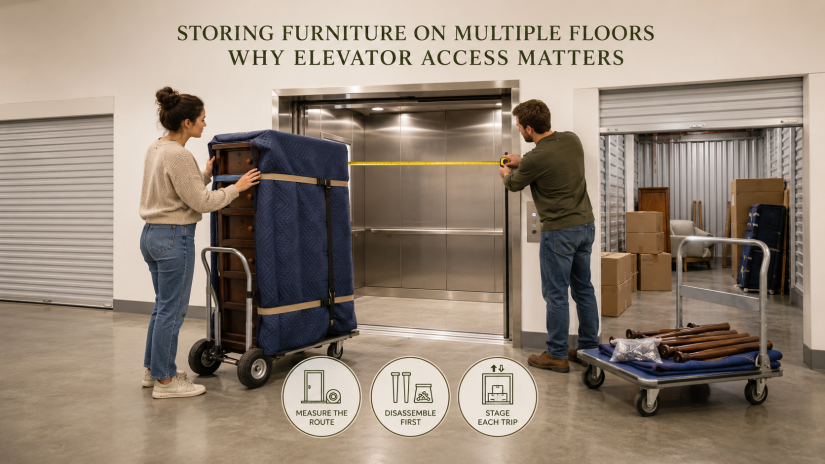


Storing Furniture on Multiple Floors: Why Elevator Access Matters
Furniture usually looks manageable until someone has to carry it up a flight of stairs.
A dresser gets heavier with every step. Sofas don’t turn the way you expect. Bed frames catch on walls. By the time everything reaches the right floor, even the smaller boxes feel personal.
StorHouse Self Storage – Lehigh Street at 1449 Lehigh Street is a multi-story storage facility with interior access and elevator access. It also offers climate-controlled units, ADA accessibility, 24-hour cameras, and on-site management.
Storage units with elevator access can make an upper-floor move more practical. You still need to measure, pack, and load correctly. The elevator just removes the staircase from the problem.
Measure the Whole Route
A piece of furniture fitting inside the storage unit doesn’t mean it can reach the unit.
Measure the height, width, and depth of sofas, dressers, tables, shelving, bed frames, and appliances. Then ask about the route from the unloading area to the available space.
Important measurements may include:
- Building entrances
- Elevator-door clearance
- Elevator interior space
- Hallway width and turns
- Storage-unit door opening
Don’t guess based on how the furniture moved through your house. The angles will be different.
Ask the Allentown staff about current unit availability and the route to the unit before scheduling movers. Elevator dimensions, operating rules, and weight limits should be confirmed directly rather than assumed.
Take Apart Furniture Before Arriving
Disassembling furniture at home is usually easier than doing it in a hallway.
Remove table legs, bed rails, shelves, and other pieces when the furniture can be taken apart without damage. Photograph the item first if the assembly isn’t obvious.
Put screws, bolts, brackets, and other hardware into a labeled bag. Keep the bag with the matching piece without placing tape directly on finished wood, fabric, or leather.
Bundle long pieces together so they don’t separate during the move. Wrap finished surfaces with moving blankets and cover sharp corners that could scrape walls or elevator doors.
Some furniture should remain intact. Older, fragile, or custom-built pieces may not handle disassembly well. Ask a qualified mover or furniture professional if you aren’t sure.
Choose the Unit After You Know the Load
Furniture takes up space in odd ways. A sofa uses a lot of floor area but leaves awkward gaps. Tables can waste space unless the legs come off. Mattresses fit vertically in some layouts but still need to be stored according to manufacturer guidance.
The StorHouse Storage Unit Size Guide can help estimate a starting size. Count packed boxes and measure furniture before making the final choice.
Leave room for an aisle if you’ll need anything during the rental. A tightly packed unit may hold more, but retrieving one box can turn into a full afternoon of moving furniture around.
Keep the heaviest pieces on the floor. Don’t use upholstered furniture as shelving, and don’t build tall stacks on damaged cardboard.
Plan Elevator Trips Before Move-In
Elevator access works best when the load is organized.
Group furniture and boxes by room or by where they’ll sit inside the unit. Bring items for the back of the unit up first. Keep anything needed sooner for later trips so it stays near the entrance.
Use suitable moving equipment. A furniture dolly, hand truck, straps, gloves, and enough helpers can keep the process moving. Confirm what equipment is permitted and ask if the facility has any loading procedures you need to follow.
Don’t hold the elevator while the rest of the load is still being unpacked outside. Stage a manageable group, take it upstairs, return, and repeat.
This isn’t glamorous. It is much less chaotic.
Protect Furniture Inside the Building
Interior access reduces direct exposure during the walk to the unit, but furniture still needs proper preparation.
Clean every piece and let it dry completely. Cover wood and upholstery with moving blankets or breathable furniture covers. Tight plastic can trap moisture against some materials.
The Lehigh Street facility offers Climate-Controlled Units, which provide a more consistent indoor environment. Customers may want to compare this option for wooden furniture, leather, upholstery, electronics, photographs, and other belongings affected by temperature or humidity changes.
Climate control won’t correct damp packing or existing damage. Everything should enter storage clean and dry.
Use Elevator Access During a Move
A move rarely happens in one clean step. Furniture may need somewhere to sit between lease dates, home closings, or renovation stages.
StorHouse’s Moving & Relocation Storage page covers planning for those gaps. An upper-floor unit with elevator access can help keep household belongings together while the next space is being prepared.
Pack based on the next destination. Label boxes by room and keep furniture hardware with the correct piece. Anything needed immediately after the move should stay with you.
When the unit is loaded, take photos of the layout. A quick visual record can help you remember where each piece went and which items need to come out first.
Ask About Access Before Moving Day
The time to learn how the elevator works is not when the truck is already outside.
Ask about the unloading route, elevator access, building procedures, and any restrictions that may affect the move. Confirm that the largest furniture will fit through every part of the route.
On-site Management at the Lehigh Street facility gives Allentown customers a local staff member to speak with about the property and available units.
StorHouse is family-owned and operated directly by RAB Management Corp. Customers work with StorHouse staff rather than an unrelated third-party management company.
Contact StorHouse Self Storage – Lehigh Street with the dimensions of the largest pieces, the amount of furniture being stored, and the expected rental length. The team can explain current unit options, elevator access, and the move-in route before you load the truck.


